• Abiogenesis, the creation of life from non-living materials, is presently undergoing much scientific work. It is my understanding that presently scientists have been ablecells to:

    1. manufacture the amino acids necessary
    2. produce RNA
    3. Cell walls

    They have yet to produce a cell that is self-replicating. It would seem that something is missing. Though scientists have life in abundance to study, they have yet been unable to ascertain the steps that led to it. I DNAthink they are stuck at the point where there was a world within which RNA existed.

    It is at this point that the theists would exhort that the scientist to throw up his/her hands and accept that a god did it. Thank Godgoodness that scientists are only about seven percent religious, which is why their work continues.

    volcanicMuch to do has been made about the conditions that prevailed upon the world early in its existence. Scientists so far have tried so hard to manufacture life following guidelines from the information we have about the early earth. So far, it seems, attempts have failed (Though this could change without a moment’s notice).

    What if the conditions necessary for the formation of life from the bare constituents was never present on this earth? Suppose instead that the conditions existed at some point that only allowed the formation of life from previously manufactured materialsmeteor - earth arriving on meteorites? In this case the materials having been formed on some distant site under unknown conditions.

    Perhaps it would be better to seek ways that life could have formed under any condition rather than limiting those conditions to what earth might have transiently offered. Scientists might look into the possibility of manufacturing the ingredients and then life in any way they can. Perhaps more than one way is possible. The likelihood of which way it actually occurred can then be derived. Perhaps from this we can also deduce where the process first began.

    question markAs far as life on earth, the problem becomes more complex as we cannot be sure what arrived and when, though we do have a pretty good idea when life began. Not only what arrived is a problem to deduce, but also what the conditions were on earth that could at the time carry on from the materials received. At this point it is thought, that anaerobic conditions prevailed at the beginning. Aerobic life, like ourselves, could not have come into being until life forms developed that exhaled the oxygen necessary for respiration. Anaerobic life still exists today deep beneath the soil. Maybe this is what we will find on Mars, Titan, and others.

    Anyone out there think, seriously, that we as a species should give up this endeavor? Should we return to a time of accrediting some deity for every thing that is not yet question markknown? It does seem that science generates more questions than answers. It is the questions, however, that is the food of science, not the answers.

  • This post is directed towards those Christians that are beginning to question their faith.

    First of all, do not mistake your own innate predilection towards logic andbrain 3 reason for some evil incarnation of Satan. Unless you’ve eaten feces laden food and thereby gained a tapeworm in the brain the only thing in there is you. Whether it be a voice, or merely thoughts that somehow emerge from out of nowhere, there are no demons, no entities, no one else but you in your head. The unexpected thoughts could merely be your reasoning mind analyzing the information that you have been told is true and coming to the conclusion that it just couldn’t be so. That cracker seemed so much like an ordinary cracker even though it is claimed to have undergone a miraculous change into some fragments of flesh.

    I know that Christians fear to question those things they have been taught all their lives are the truth. Long ago I suffered that nagging feeling that my thoughts were being scrutinized and that someone, somewhere, disapproved of my doubts. To merely question any precept put forth by the leaders of the faith produced feelings of guilt, anguish, and fear. An omnipresent god with omniscient powers will do that. Yet, various scripture seems to point out that the god of the bible lacks to some degree the omniscience with which we credit him. Look at Genesis 11:5, he had to come down from his perch to see what men were doing. Didn’t he know, already? He is supposed to be everywhere and know everything. In Genesis 18:21 he had to go down to verify information that had reached him. It would seem god is neither omniscient nor omnipresent.

    Judges 1:19 demonstrates that god is not omnipotent. He could not defeat an adversary that possessed iron chariots.

    A god that is not omniscient, or omnipresent, and is not omnipotent. Is this a god at all? Is there nothing left? Does this god exist?

    This is the favor you must ask of your god. That is, to substantiate his existence. He created you, your reasoning powers are of his invention, are they not? If he does not provide substantial evidence of his existence isn’t it inevitable that you would question it? Ask him then, “dear god, make yourself manifest, just to me, so that I can believe. You may be prevented from doing works for some reason upon this world, except in clandestine manner, but please give me one tidbit upon which my reasoning brain can chew.” That’s not much to ask in return for the years of faith you have given. At this point you will have to decide what exactly will be sufficient to garner your faith to the end of eternity. For some it is as trivial as a piece of toast. For others proof of god’s power is seen in an odd series of coincidences. There are hurricaneeven some whocomet see god manifested when a great storm destroys a city, punishing the people for their evil. An approaching comet has even served as proof for some fringe groups.

    I would ask that you request something that could not be explained any other way. The things cited so far can be explained as totally natural. Ask him, implore him to remove the mystery. But, you protest, you must not test god. How can it be a test of god simply for him to prove he is real? Ask him simply if he will attend a tea this evening, alone in your apartment. No one need know. If he doesn’t want to stay he can go. Just stop by, come through the door, no need for display. Just make sure no one else knows of your plan lest they provide some personage to fill the bill. Lying for Jesus is a well known tactic for holding on to the flock. All they would need do is bring in someone you are unlikely to know, from an area you are not likely to go and discover them. If god is omniscient he will know, and to know, all he would need be is omnipresent, and therefore present even in the small crevices of your thoughts. Tell him to simply stop by and say hello. You cannot look upon god and live? Is it beyond his power to make that so? Let him know in advance that should it cost you your life, well it’s been a good life. If that is the price for your faith, let him know, you’ll pay it.

    If your father cannot show up for a private little tea party with one of his children, what kind of father is he? Then again, perhaps you should have said there would be cookies.

  • Islam and Christianity are both death cults. Death 1

    If only you would die you might get your reward. Die in service to god and your reward increases many fold.

    Existence is much superior to non-existence. Consciousness is better than an absolute void. Life after death, though the very concept is contradictory, is desired by many, many who distain the very life they have now, the only one that in reality they will ever have. They are afraid to live this life, as they are afraid of death. With immortality awaiting, death of this life is desirable.

    death 2This promise of eternal life has been found useful to many who seek to manipulate others. With this power they can convince hordes of followers to sacrifice their only lives in service to their cause. Whether this service leads to an actual early death or not, the service is rendered nevertheless, not for some lofty god, not for some promised reward, but instead in service to the desires of the leaders of these death cults. These leaders dangle the promise of reward as one might hold a morsel in front of a donkey’s face to make it serve. At least the donkey may get its reward, whereas the Christian, the Muslim, serve, sometimes to the death, fordeath 3 nothing.

    Any belief system that teaches that this life should be hated and that one must serve some being that one cannot see, cannot hear, in expectation of a reward, a reward after one dies, is a death cult. These are the types of belief systems that can make people shoot abortion doctors, stone innocent children, and force airliners full of innocent people to veer unhesitatingly  into buildings. Yes, Christianity is death 4quite capable of these acts in every degree that Islam is capable.

    No, not all of the members of these cults,  there are the cherry pickers, the non-fundamental forms of Christianity, people who in all respects really only give true Christianity lip service, that could not realistically be convinced to perform these hideous acts, just as theredeath 5 are in Islam, no doubt. Even these mild forms of the disease, and have no doubt, it is a disease of the mind, produce a myriad of effects which society would be very much better off without. From bigotry, misogyny, to the divisiveness all religion promotes, society would be much improved without it.

  • Relevant? Significant? Importance? None of these words seem to encompass the meaning desired. If any come close it may be relevance.

    1.having direct bearing on the matter in hand; pertinent

    Yet, this meaning seems to pertain only to transient matters, rather than on-going ones.

    Would it be proper to say:

    I have decided to eliminate or discard those acquaintances that are no longer relevant to my life. That would seem more long term, yet, is the usage correct?

    Perhaps the second meaning: pertinent … indicates a longer duration.

    Pertinent: pertaining or relating directly and significantly to the matter at hand; relevant: pertinent details.

    No, it seems it is also related only to present rather than future conditions. “to the matter at hand”.

    Perhaps contrary is the word I seek.

    Would it be proper to say:

    I have decided to eliminate or discard those acquaintances that are contrary to my principles or contrary in that they are always disagreeable.

    Always would have to be key here. Disagreeing always indicates an individual is disagreeing simply to be disagreeable. Some may argue that it may simply be that I am always wrong and that’s why they always disagree, and I don’t think that to be the case, that is, that I am always wrong.

    Then there are those whose game seems to be playing “devil’s advocate”.

    Discarding of acquaintances has little to do with that anyway. Arguments between individuals about different issues is a necessary component of everyday socializing. No one can agree about everything.

    Perhaps avoidance or avoid, would be a better thing than to simply eliminate. Those who are not relevant may become relevant at a later date.

    Determining who is relevant and who is not, though appearing a simple task, in the end, is not. People tend to come and go and return, only to leave again,during one’s life. Paths cross and crisscross repeatedly.

    Perhaps it’s those who I find most irritating, most disagreeable without good reason, that I should avoid. Those that throw a damp cloth on the most exciting affairs. Those who dwell in a land of despair and despite your most heroic efforts, remain there. These emotional vampires, who leave you drained.

    Maybe it’s those that have immense egos, who never fail to tell you how right they are and how wrong you are. Those bloated egos that, despite the truth, can never admit their errors. They simply are incapable, they think, of making a mistake and usually imply it was your doing, your fault, if they did. They are incapable of taking responsibility.

    Who will fit the classification of irrelevance?

    It takes all kinds, it is said. To eliminate one class is to eliminate needed diversity. But can stress be called desirable? Have you ever been hollowed out by some leach who leaves you drained and seeking relief? Wouldn’t it be to one’s advantage to avoid them if possible?

    And those towering egos, how does one go about avoiding them, especially since great numbers of them are in positions of authority? Usually your boss at work, sometimes a politician, a judge, or other public figure.

    We all do what we can, and I will do the same.


  • Optimism:

    1. a disposition or tendency to look on the more favorable side of events or conditions and to expect the most favorable outcome.

    2. the belief that good ultimately predominates over evil in the world.

    3. the belief that goodness pervades reality.

    4. the doctrine that the existing world is the best of all possible worlds.

    Pessimism:

    1. the tendency to see, anticipate, or emphasize only bad or undesirable outcomes, results, conditions, problems, etc.: His pessimism about the future of our country depresses me.

    2. the doctrine that the existing world is the worst of all possible worlds, or that all things naturally tend to evil.

    3. the belief that the evil and pain in the world are not compensated for by goodness and happiness.

    Pollyanna:

    1. an excessively or blindly optimistic person.

    adjective

    2. ( often lowercase ) . Also, Pol·ly·an·na·ish. unreasonably or illogically optimistic: some pollyanna notions about world peace.

    Optimal use of Optimistic Outlook

    Upon superficial logical examination an optimistic outlook seems irrational. After all, if one is pessimistic one expects the worst and will never be disappointed. With an optimistic outlook disappointment is a possibility. If your goal is to avoid disappointment then, you must adopt a pessimistic attitude.

    Examining further the ramifications of maintaining an optimistic outlook we can list some possible benefits that have been suggested.

    1. Stronger immune system
    2. Lower risk for disease, anxiety, and sleeping disorders
    3. Improved focus
    4. Reduced stress
    5. An increased lifespan
    6. More energy
    7. Better relationships with yourself, your family, and your friends

    An optimistic, therefore, a happy state of mind, is difficult to maintain in the face of life’s daily challenges. Sometimes people who are excessively happy despite their troubles can be viewed as pollyannas, or worse. However, as has been suggested, for better health, it is wise to risk facing disappointment rather than always expecting calamity.

    One way to help yourself in your effort to remain upbeat, optimistic, and happy is smiling. Practice smiling in mirror, a happy face is contagious and it has been said by some that smiling actually causes the brain to release endorphins, serotonin, and other natural pain killers. (http://joannecipressi.com/smiling-produces-happy-hormones-more-than-chocolate-smile-more/) (http://www.bettyphillipspsychology.com/id105.html)

    Optimistic Quotes

    “What we think, we become. All that we are arises with our thoughts. With our thoughts, we make the world.” –The Buddha

    “A pessimist sees the difficulty(calamity) in every opportunity; an optimist sees the opportunity in every difficulty (calamity).” –Winston Churchill

    “Sometimes your joy is the source of your smile, but sometimes your smile can be the source of your joy.” – Thich Nhat Hanh

    “Believe that life is worth living and your belief will help create the fact.” – William James

    “We must become the change we wish to see in the world.” – Mohandas(mahatma) Gandhi

    -anonymous quotes:

    “Life is what you make of it.”

    “Every cloud has a silver lining.”

    “A life lived in fear is a life half lived.”

    “Happiness is a state of mind.”

    “Change comes from within.”

    (http://www.joyprogram.com/optimistic-otpimism.php)

    Keep smiling.

  • Here I sit taking inventory once again of my life’s journey. I am sure that I have done this before, perhaps not so clearly. In many ways what I have written reflects my travels. Yet to sit down and reflect on things that have led me to my present state feels like an old and new endeavor simultaneously.

    Truth-seekers, I have been admonished, should not be chastised in their quest. These people who seek greater understanding or illumination, I am told, should be respected. Such people have sought this information as they would seek some holy grail since humanity developed the means to have such thoughts. This life, they protest, must have some meaning, some importance beyond our existence, some purpose yet hidden. They travel from one point to another seeking enlightenment, asking questions of wise old sages, digging into ruins, and reading ancient texts. Sometimes they indulge in mixtures that elicit hallucinations hoping to find some scrap of wisdom, some small sign or evidence in drug-induced higher planes. Some find enlightenment, or what they think is such, and then report to all their new revelations. Their endeavors, I find, are inhibited by their limitations. They ask whoever will listen to accept their new insights on word alone. No evidence presents itself beyond their bantering, nothing other-worldly flavors their reports. Everything, it seems, is just as they imagined it would be.

    Make no assumptions, I applaud their efforts, it adds to the knowledge we have of ancient origins. No, not the drug-laced fantasies they report, but the seeking of information, the digging into ruins, the reading of ancient texts. It gives us insight as to our origins, our mistakes, our triumphs. What bothers me is their search for meaning, meaning in our existence. Is there some reason we are here?

    If there is a reason behind our being I don’t think it can be found among the ruins of those self-same creatures that are seeking such enlightenment. We are confined to ourselves, limited by the very existence for which we seek a reason. Not only that, but our understanding in my estimation has not reached adequate level for this endeavor. Not only do we not possess, I think, the faculties for the search but also the levels to recognize the answers. Would we even recognize the reason for our existence, should it exist, even if we saw it.

    If their be an arrogance of our species it is to think that in our brief existence, our gathered knowledge, our endeavors, are sufficient to solve the mystery of our being when its origins began billions of years in the past. Although we have some ideas on our own origins we cannot fathom the origin of the greater whole. We think of a Big Bang, an immense explosion, surging outward from some infinitesimal point, but the moments, the existence that was before that point we cannot know. Some claim there is an expanding and collapsing of matter, into infinite time, but this is no better than the old religious story of turtles which hold up the earth, a towering mass, turtles that go all the way down, into infinity. How is this any better than the ancient speculations, indeed, we have some evidence that rather than slowing for a future collapse, the expansion is accelerating. This leaves us, even as before, with no clue to the absolute beginning. Even if we were to accept the expanding and collapsing, how did it ultimately begin.

    How can we hope to derive the beginning when the knowledge of our species is unable to understand even how what is, is? Why are things the way the are when they could be so many different ways? We question the reality of our own existence. The fact that we are, and the Universe allows us to be, is insufficient.

    Returning to the truth-seekers, having realized the insurmountable task upon which they proceed in their endeavors, ill-equipped not only to carry the task out, but not possessing the faculties to recognize the answer should they come upon it, we are left in wondering why the seeking continues. Would we not in our natural development someday come upon the answer, should there be one. Why waste the efforts and resources now in a vain attempt to ascertain that which is out of our reach, perhaps out of our understanding or ability to recognize? Are not these truth-seekers working in a confined box, seeking answers from those seeking answers?

    My own opinion is that humankind will progress but will not find the ultimate answer to the origins of all there is until the twilight of existence. I look upon these truth-seekers as well-meaning individuals seeking something which will remain ever elusive. The answers sought by the truth-seekers could be standing right in front of them and they would most probably not know it.

    I accept that the explanation of the Universe’s origin is presently only guessed. I accept that Earth formed and coalesced as a molten mass around and along with our star, then cooled.  I accept biogenesis as the method of life’s origins. I accept that evolution proceeded after that to produce the plentiful forms of life now seen. I do not have the means or desire to spend my finite life searching for the rest of the answers. I want to enjoy it. I will let others, those now and into the future, delve into such matters. The  rest of the answers will come, I am confident; they will come in time.

  • Islamic radio station fined

    How much more evidence do you need to convince you that Islam is not a religion of peace, that Islam will not respect freedom of speech, and that Islam is unable to coexist in a civilized country with diverse beliefs or no beliefs. Showing disrespect for anything, anything at all, is one of the rights protected by freedom of speech.

  • The boat that keeps going even though there is no way for it to float. Its construction is so faulty that it leaks from many holes. There were so many contractors, each doing a different part, that none of the parts can possibly match, yet the boat remains afloat. Each passenger works feverishly to bail the water, to patch the holes, yet more water enters, more holes appear, as fast as repairs are administered. Sometimes closing one hole, creates another.

    Even though its sinking seems imminent, more passengers step in year after year. Thoseboat sinking that have stepped in before, even though they see the problems, the faulty construction, and its irrational continuance, encourage more to make the leap. Its existence above the water is maintained only by the fact that the bailers are able, by their numbers, to bail as fast as the ship is sinking.

    The good ship “Christianity”, a sinking ship, full of holes, held up by the sheer will of the ignorant. Nearby, the good ship Reason, Ship reason 1sailing on, is stubbornly ignored by those who would instead prefer to bail a sinking ship. Make no mistake, should the numbers willing to stay and bail, decide instead to give Reason a try, the good ship Christianity would take a quick plunge and quickly rest at the bottom of history’s oceans.

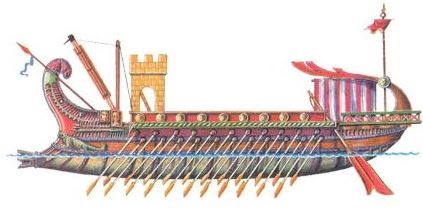
    However, the posts, manned by willing passengers, recruited by inheritance by their forebears, will continue to be filled. The ship, against all reason, floats on year after year, rendering a large portion of the population under its spell. Those that command the ship are able, through the spell that has been cast, to convince those that maintain the ship, to do their bidding. As a result of this spell, this control by theRoman slave ship ship’s captains, and there are many, the rest of the world suffers from this irrational sustainment of a boat, that couldn’t otherwise float. None of the sustainers note the fact that it is not the boat but the captain they serve. A captain who knows no better than they, how to steer.

    It can only be hoped that the good ship Reason will prevail, that eventually those that  maintain the leaky vessel will someday make the leap to Reason.

  • Some say that everyone has three faces: One for the public, one for family, one for self.

    But I say human beings change throughout their lives. The face one wears now was not the face worn yesterday, nor will it be the face worn tomorrow.

    The daily procession of images and information has an impact. To remain unchanged means you must not be part of the procession. Even if you partake in sensory deprivation it is a change. It could lead to eventual madness, but that is a change also.

    What is your fancy today? What do you enjoy now? Over a lifetime these both change. What strikes you funny today may not be so hilarious tomorrow. What seems so serious now will be trifling soon enough. No one can be sure how anyone might react today, tomorrow, or the next week about the same thing. We seem ruled by cycles, our moods changing by them. You might be interested today in bicycling but lose interest in a week only to regain interest in a month’s time. Up and down, over and under, in and out, ever changing.

    We are all people who wear thousands of faces never one quite the same. We are all affected by what we see, hear, taste, smell, and feel.

    Some people do not like change so they try to remember and emulate the past. Experiencing the same things over and over. Even then no two experiences are the same. To never change is boring. Some people have the ability, however, to endure higher levels of boredom. I have noticed that these people are dull and boring, always living in the past. If anyone were to come close to never changing, it would be those that dwell on things past.

    There are two choices, get older or die. To get older you must embrace change. Change or die. Some people resist change and die inside. They are said to get old. While getting older is inevitable, to get old is to die.

    So, I implore, wear your new face everyday through life’s up and downs. If you don’t like the face you’re wearing today know this, it won’t be the one you will wear tomorrow.

  • This issue is never settled. It never will be completely settled unless the education level becomes greater.

    The question in the title: “Aren’t you glad you weren’t aborted?” is asked in many pro-life pleadings. The answer is, of course, everyone is glad to be something non-existencerather than be nothing. Turning the question around a little bit and asking instead “What if your mother had aborted you?”, is something the pro-life crowd avoids. If your mother had aborted you, you would not be aware of it. You couldn’t care, because you’re not. Your non-existence would simply continue. You would not be around to contemplate the question.

    Do you have a memory retained from before you were born, before you were conceived? I used to think I had a memory of being MH900283814born, of emerging from the birth canal, a squeezing, like being crushed out by some log. Then I learned that I was born through  a caesarean  procedure. I was cut out like some tumor, some parasite. There was no squeezing, no forcing out, I was simply removed.

    Let’s take this pro-life label and examine it. Actually, it turns out that it is a pro-fetus stance, and has little to do with life after birth. The pro-life crowd is not concerned about what happens to a child after it is born. Its quality of life after birth is not at the center of their concern. All that matters to these people is that the woman be forced to carry the fetus until it is to term, even if it kills her.

    einstein1912Usually the pro-life stance is the result of religious beliefs. An abortion would interfere with God’s great plan. Often they ask “What if the next Einstein ends up aborted?” Many answer with “What if the next Hitler ends up aborted?” In desperation they ask “Don’t you have any compassion as to what that child might have become, what part it might play in God’s plan?” Unconcerned with quality of life on this planet they would have women pumping out children until theycrowd are exhausted, until we stand elbow to elbow, until you need the cooperation of the hitler2crowd simply to turn around. What good is life, without quality of life? Is the possibility of dying at each other’s throats, killing each other like rats in a cage too small,  what the writer in the Bible meant to happen when exhorting people to go forth and multiply?

    One argument used by the pro-fetus crowd is the possibility that by twenty weeks a fetus neural-network-2develops the neural net capable of feeling pain. Yet, only 1.3 percent of abortions occur after 20 weeks. The highest number of abortions(32%) occur less than six weeks in. Forty-nine percent occur less than seven weeks in. Sixty-four percent less than 8 weeks in. Ninety-seven percent occur in less than 20 weeks. Yet, they would deny an abortion for any reason no matter the consequences.

    It is the pro-life crowd, no, the pro-fetus crowd, that lacks compassion. They care not about the quality of life, they care only about the quantity. Many in the pro-life crowd hold fast to a belief in the death penalty. They would force the community to put to death a life as an “Eye for an Eye” while in the same breath proclaiming that abortion is murder. These same “good Samaritans” oppose Euthanasia. We treat our dogs and cats better than people when they are Tearsold and in pain. They insist people die in “God’s time” not human time. God’s will be done, regardless of the suffering, the pain, the lack of consciousness, in spite of the pleading “please let me go.”